
Whether the oils have worked out
A cured surface has lost its sheen and taken on a more open texture. Asphalt still looking glossy and slick is telling you it is not ready.
Serving Indianapolis, Indiana & surrounding areas
Mon–Fri 8am–6pm · Sat 9am–2pm
The most common question on new pavement in Westfield is when to seal it. Answering too early wastes a coat, and waiting too long gives up the years the first seal is meant to protect.
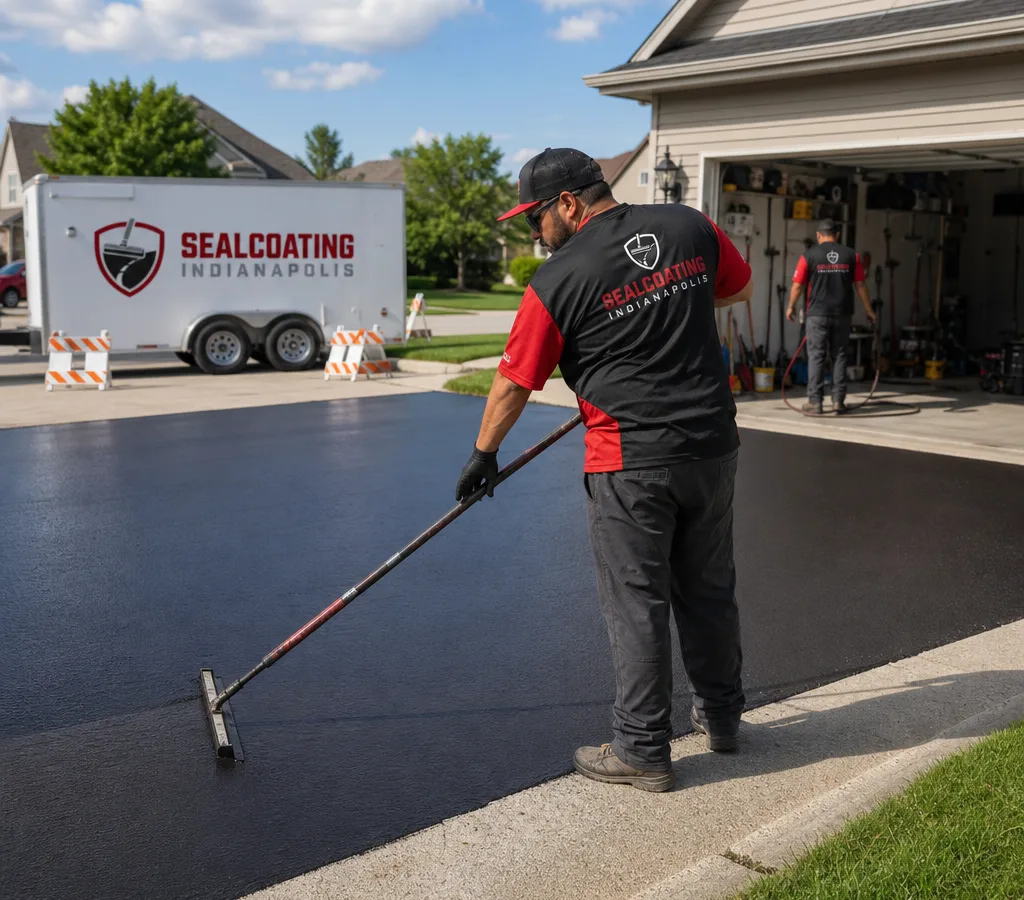
Fresh asphalt holds light oils that need to work their way out of the surface. Sealer applied before that happens traps them, and the coat can stay soft, scuff under tires or lift in patches during its first warm spell.
The usual guidance is somewhere between six months and a year, but a date on a calendar is not the test. What matters is how the surface itself is behaving, and that is something to look at rather than assume.
If you are comparing contractors, focus on the prep and the cure plan. The best blacktop sealing in Indianapolis is rarely about who can spread material fastest; it is about who cleans thoroughly, treats oil spots correctly, keeps sealer off concrete and brick, and tells you when you can safely drive on it again.
For an overview of our broader work, including other asphalt protection options, you can start with asphalt sealing in Indianapolis.
A first seal is worth getting right, because it sets the maintenance rhythm for the next decade. Five things decide whether the surface is ready.
Book Your Free InspectionA cured surface has lost its sheen and taken on a more open texture. Asphalt still looking glossy and slick is telling you it is not ready.
New construction grading is occasionally off, and a low spot that holds water is easier to address before a seal than after.
The perimeter and the garage apron are where compaction is hardest to get right, so those are the first places a dip or a soft area appears.
Loose aggregate coming off the surface points to a mat that was laid thin or placed too cool, which is worth identifying while it is still a warranty question.
If the surface is not ready, we will say to wait and tell you roughly when to call back. A coat applied early is money spent twice.
The visit starts with the surface itself rather than a tape measure. Texture, color and how the asphalt responds underfoot in warm weather all indicate whether the cure has finished.
We also look at the things a new driveway should not have yet. Aggregate working loose, a soft edge, standing water or a settled area near the apron are builder-era issues, and knowing about them early gives you options that disappear later.
Where the surface is ready, the work itself is straightforward: clean thoroughly, protect the concrete, cut in the edges and apply an even coat. New asphalt takes sealer well, which is exactly why the timing is worth getting right.
Finally, we apply the sealer in a controlled pattern for even coverage, paying close attention to turning areas near the garage and the street where tires pivot and scrub. Before we leave, we confirm the plan for keeping cars off the driveway until the surface has set.
If you are looking for a driveway sealing company Indianapolis residents can rely on, this is the difference: the surface is cleaned, edges are handled neatly, and the cure plan is clear.
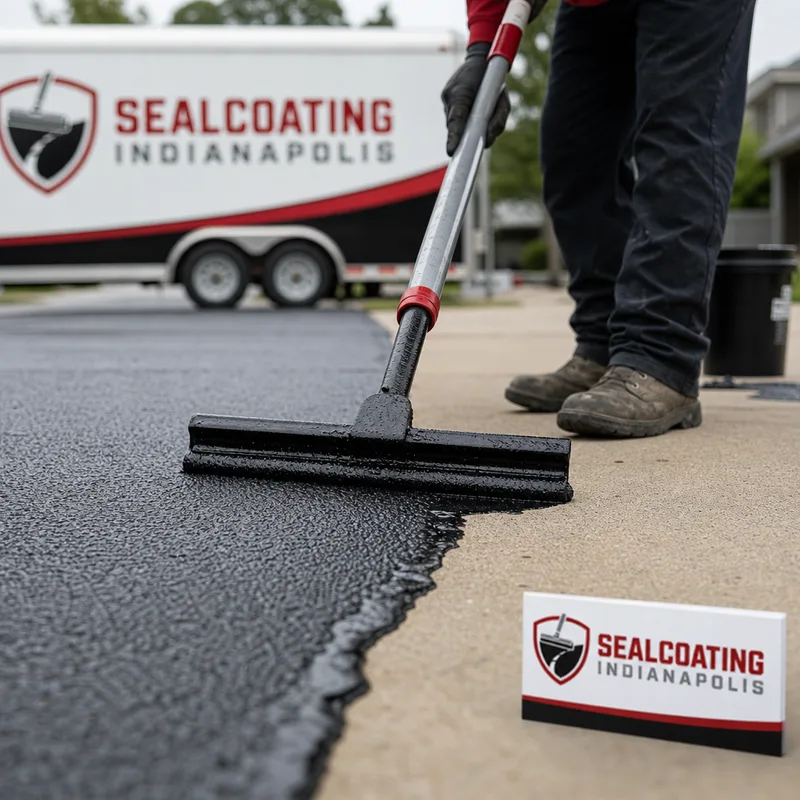
The first step carries more weight here than on any other kind of driveway, because its answer is sometimes that we should not be sealing yet.
We read the surface texture and condition to judge whether the asphalt has finished curing, and tell you plainly if it has not.
Raveling, soft edges, standing water or settlement get pointed out while they are still worth raising with whoever laid the pavement.
New driveways collect construction dust and tracked soil, both of which prevent sealer bonding if they are left in place.
Concrete aprons, sidewalks and borders are protected, then the edges are cut in by hand before the body is coated.
An even coat goes down and you get a realistic reopening time, plus a sensible interval before the next seal.
A first seal on an average residential driveway typically runs about $250 to $700, with larger driveways and circular drives often landing around $700 to $1,400+. New pavement in sound condition usually sits toward the lower end of whichever band its size puts it in, since there is rarely crack filling or patching to carry. Square footage, how much construction dust and tracked soil has to come off, access, and any oil staining are what move it. We confirm the figure on site, and we will tell you if the right answer is to wait rather than quote.
Your final price depends on square footage, how much cleaning is required, crack filling or spot patching needs, access, and whether there are oil spots that need special treatment. The exact cost is confirmed after a quick on-site look at your driveway and its condition.
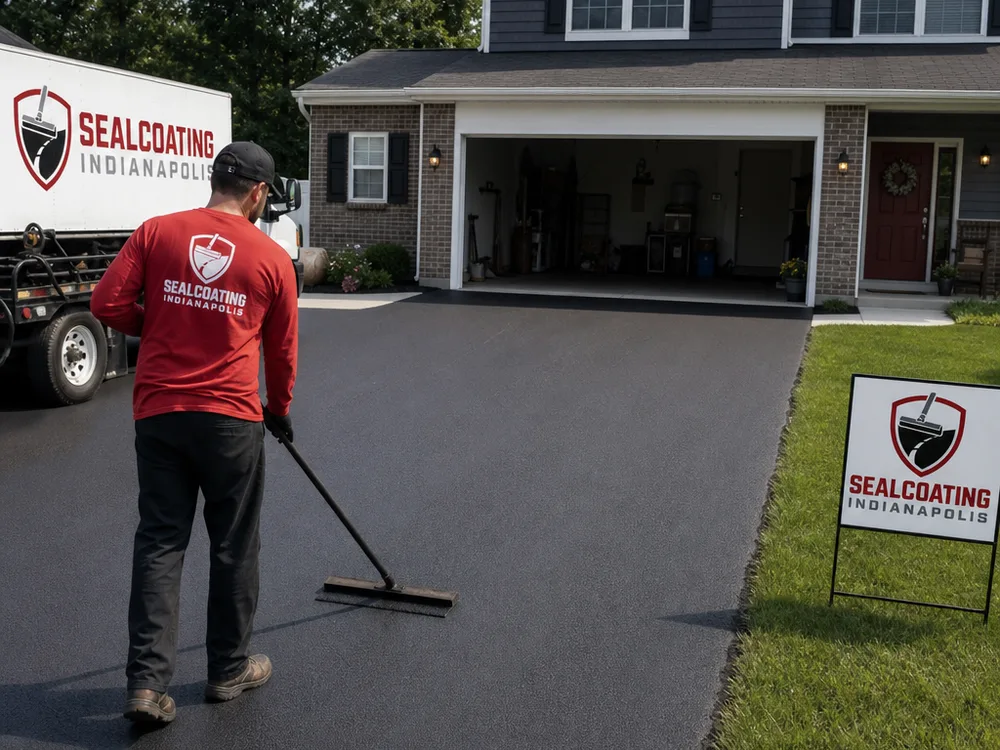
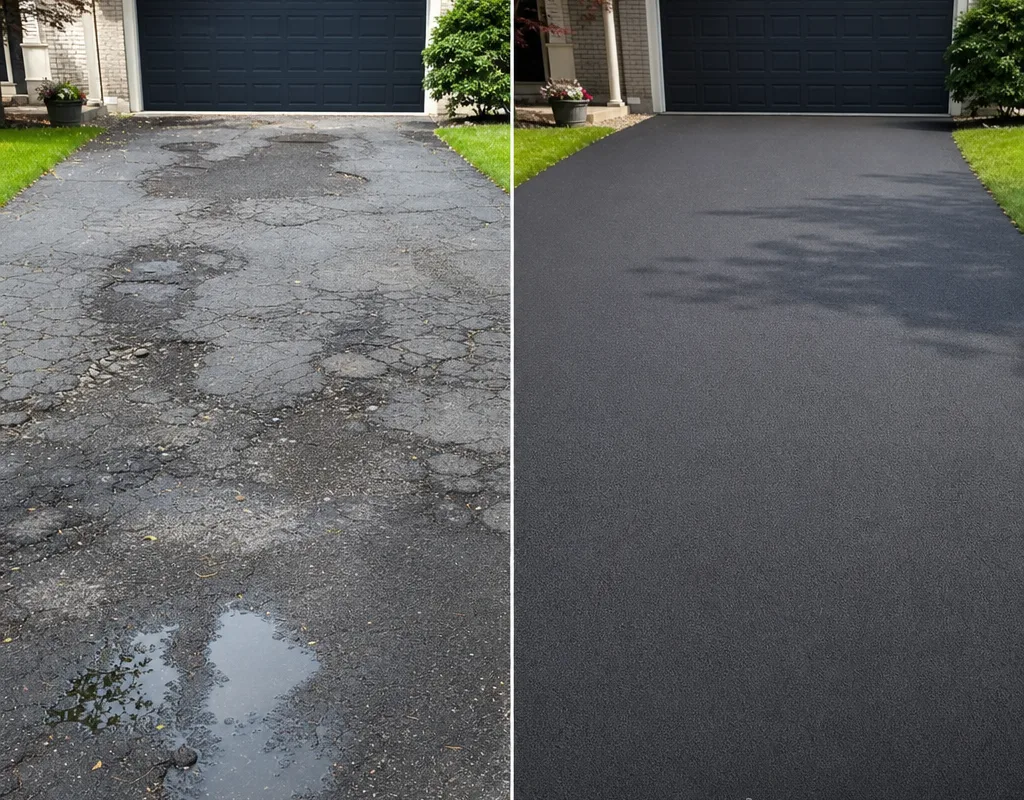
Images from residential sealing work, showing surface finish and the edges where asphalt meets concrete.
Owners of newly built homes ask these, usually after a neighbor has had their driveway done and the timing suddenly feels urgent.
We will read the surface, tell you plainly whether it is time, and give you a written scope when it is.
Request a quote
Send a few details and we will confirm a time to come look, usually within one business day.