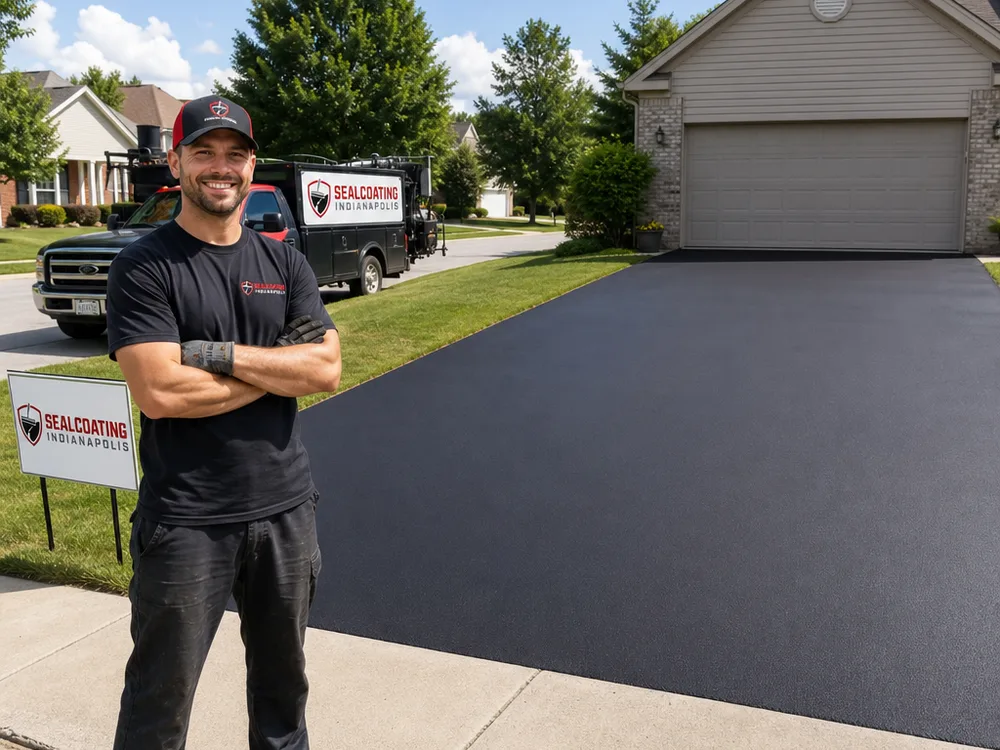
Careful prep before any sealer goes down
We clear debris, address vegetation at edges, and clean the surface so the sealer bonds to asphalt instead of dust. Prep is also when we flag areas that should be patched or crack-filled first.
Serving Indianapolis, Indiana & surrounding areas
Mon–Fri 8am–6pm · Sat 9am–2pm
Keep your asphalt looking sharp and holding up to Indiana weather with clean, even sealcoating and straightforward scheduling from Sealcoating Indianapolis.
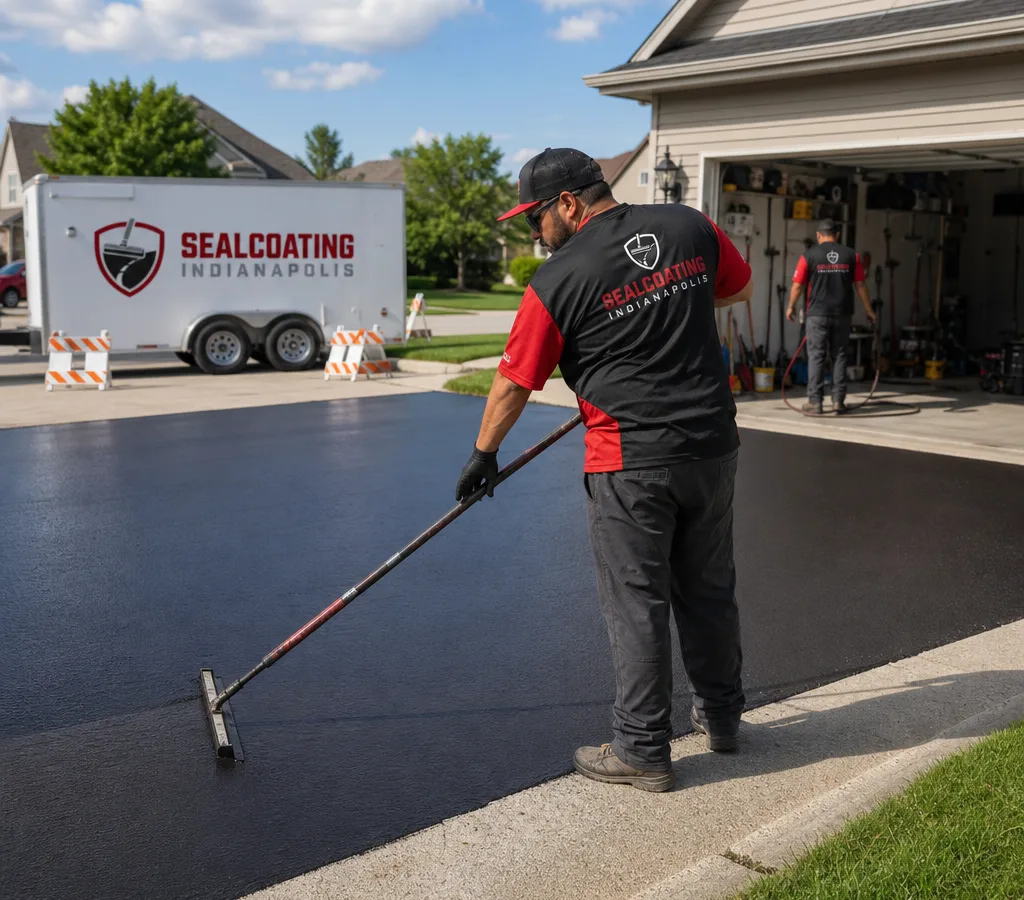
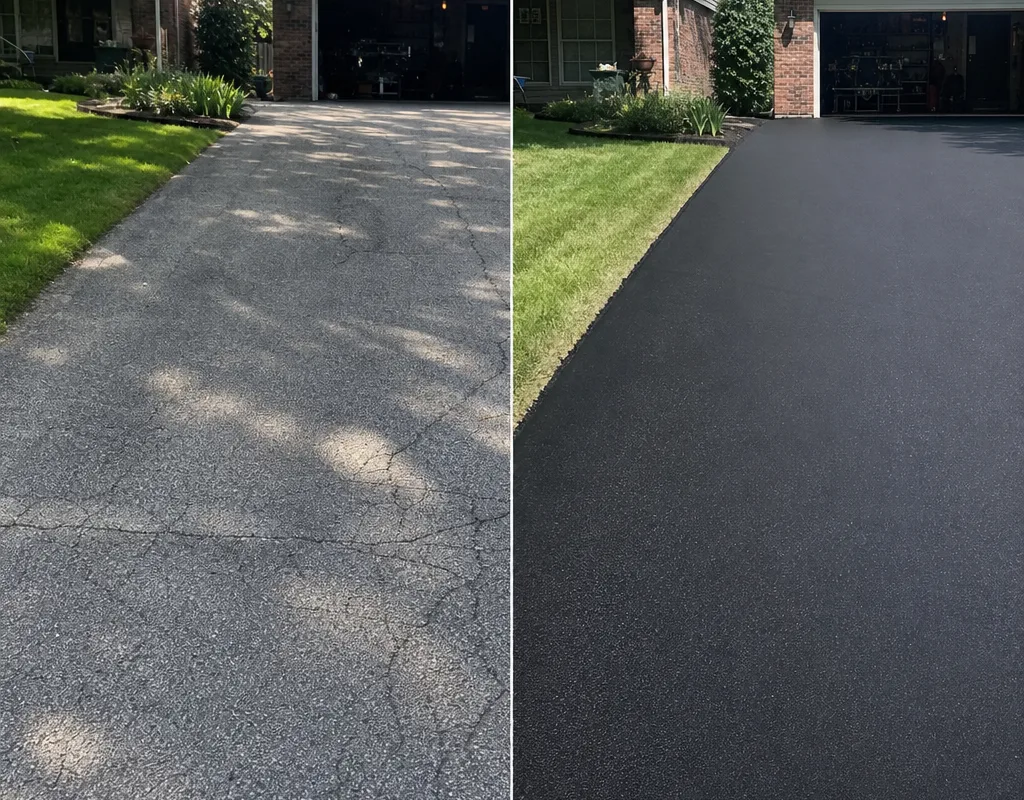
Driveway sealing Indianapolis homeowners choose is mainly about slowing down surface wear: sun dries out asphalt, water gets into small cracks, and winter freeze-thaw cycles open those cracks wider. A quality sealcoat adds a protective film on top of the asphalt so the driveway sheds water better and resists oxidation.
Around Indianapolis you will also see driveway wear from traffic and turning tires near the garage and at the street. Those tight turns scuff the surface and can pull loose aggregate over time. Sealcoating will not fix a base problem or stop structural movement, but it can help a sound driveway stay in good condition longer and keep the surface cleaner and darker.
If you are comparing contractors, focus on the prep and the cure plan. The best blacktop sealing in Indianapolis is rarely about who can spread material fastest; it is about who cleans thoroughly, treats oil spots correctly, keeps sealer off concrete and brick, and tells you when you can safely drive on it again.
For an overview of our broader work, including other asphalt protection options, you can start with asphalt sealing in Indianapolis.
We clear debris, address vegetation at edges, and clean the surface so the sealer bonds to asphalt instead of dust. Prep is also when we flag areas that should be patched or crack-filled first.
Garage floors, sidewalks, curbs, and decorative concrete should not be painted black. We take the time to cut in edges and keep sealer where it belongs.
Asphalt driveway sealcoating is typically a refined, brushable or squeegeeable sealer designed for parking areas and drive lanes. The goal is a consistent film, not a thick puddled coat.
We set expectations for cure time based on conditions. Temperature, shade, and humidity all affect how quickly a sealed driveway is ready for foot and vehicle traffic.
If the surface is failing, raveling badly, or has base issues, sealing alone will not make it right. We will explain what we can do now and what may need to be addressed next.
A professional driveway seal coating in Indianapolis is a short project, but there are several steps that decide whether it looks good and lasts.
We start with a walk-through to confirm the driveway is a good candidate for sealing. New asphalt usually needs time to cure before it should be sealed, and older driveways may need crack filling or spot patching first. We then clear the surface and clean it so the sealer can bond.
Oil and fluid spots need extra attention. Sealer can mask discoloration, but it does not remove oil that has soaked into asphalt. Depending on the spot, we may recommend cleaning and priming so the sealed finish stays more uniform.
Finally, we apply the sealer in a controlled pattern for even coverage, paying close attention to turning areas near the garage and the street where tires pivot and scrub. Before we leave, we confirm the plan for keeping cars off the driveway until the surface has set.
If you are looking for a driveway sealing company Indianapolis residents can rely on, this is the difference: the surface is cleaned, edges are handled neatly, and the cure plan is clear.
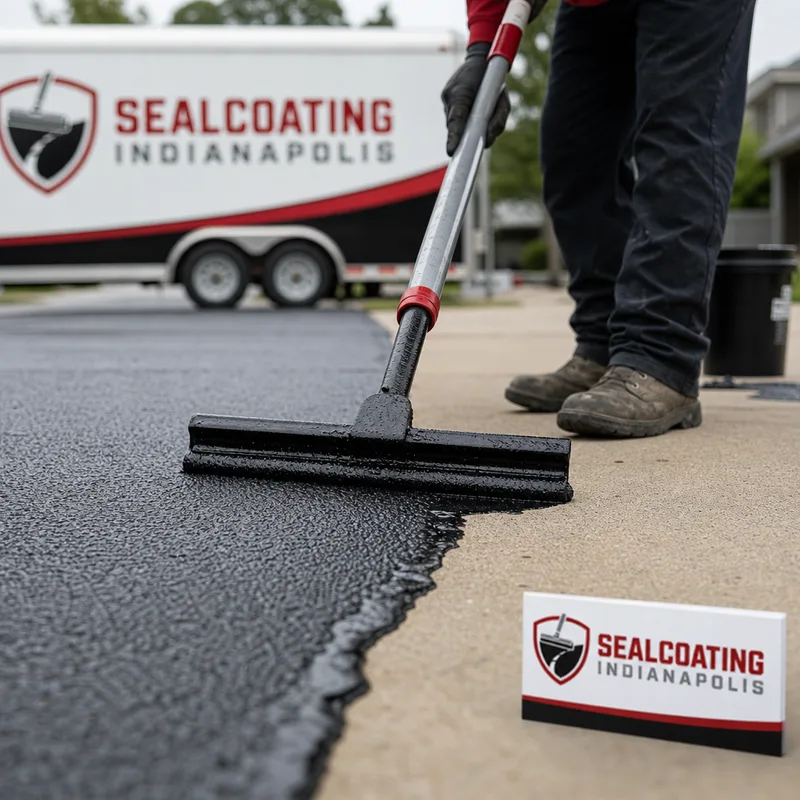
We confirm the driveway surface condition, drainage, and any areas that need crack filling, patching, or extra cleaning before sealcoat.
We protect adjacent concrete and garage thresholds as needed, remove loose material, and clean the asphalt so the sealer bonds properly.
Working cracks are treated before sealcoat. Filling first helps reduce water entry through the surface and keeps the finished coat looking more consistent.
We apply an even coat with attention to edges and high-wear areas. The goal is uniform coverage without heavy build-up.
We review when it is safe for foot traffic and vehicles, plus simple after-care like avoiding sharp turns in the first days and keeping heavy loads off while the coating finishes curing.
Most driveway sealing projects in Indianapolis typically run about $250 to $700 for an average single-car or two-car residential driveway, depending on size and prep. Larger driveways and circular drives often land around $700 to $1,400+.
Your final price depends on square footage, how much cleaning is required, crack filling or spot patching needs, access, and whether there are oil spots that need special treatment. The exact cost is confirmed after a quick on-site look at your driveway and its condition.
“They didn't just roll black over everything. The edges along our sidewalk and garage are straight, and they explained exactly when we could park on it again.
“We had a couple of cracks that were starting to open up. They filled them first, cleaned the driveway well, and the coat went down evenly without streaks.”
“Scheduling was easy and the driveway looks uniform. No splatter on the concrete, which is what I worried about after seeing messy jobs in the neighborhood.”
Tell us what you are seeing on your asphalt, and we will confirm whether driveway sealing is the right next step, what prep is needed, and a clear plan for application and cure time.