
A measured coverage rate
Square footage is calculated before any material is opened, so the amount of sealer matches the surface rather than the drum. Thin application across a wide mat is what produces a patchy second season.
Serving Indianapolis, Indiana & surrounding areas
Mon–Fri 8am–6pm · Sat 9am–2pm
Carmel driveways tend to be wide, and width changes how sealer has to be applied. We work from a measured coverage rate across the whole mat so the finish stays even from the garage apron to the street.
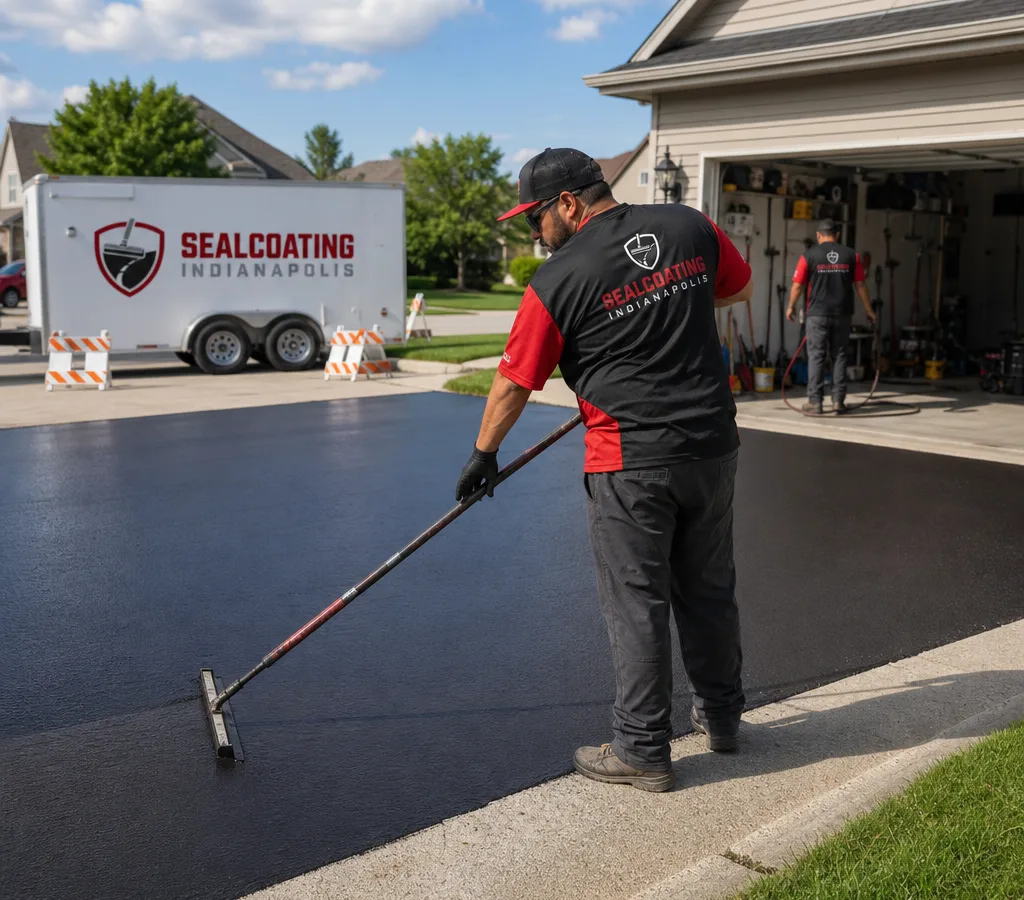
A three-car or circular drive in Carmel can hold two to three times the surface of a standard two-car driveway, and sealer spread too thin across that area is the most common reason a finish wears unevenly in its first season.
Coverage is measured, not estimated by eye. We calculate square footage before the first pass, work out how much material the surface condition calls for, and tell you whether one coat or two is the honest answer for your pavement.
If you are comparing contractors, focus on the prep and the cure plan. The best blacktop sealing in Indianapolis is rarely about who can spread material fastest; it is about who cleans thoroughly, treats oil spots correctly, keeps sealer off concrete and brick, and tells you when you can safely drive on it again.
For an overview of our broader work, including other asphalt protection options, you can start with asphalt sealing in Indianapolis.
Sealer behaves differently once a mat is wide enough that a single pass cannot cover it. These are the details that decide whether the finished surface reads as one piece.
Book Your Free InspectionSquare footage is calculated before any material is opened, so the amount of sealer matches the surface rather than the drum. Thin application across a wide mat is what produces a patchy second season.
Where one pass meets the next, the wet edge has to stay live or the seam shows as a visible band. On a wide drive that means working the surface in a planned order rather than wherever access allows.
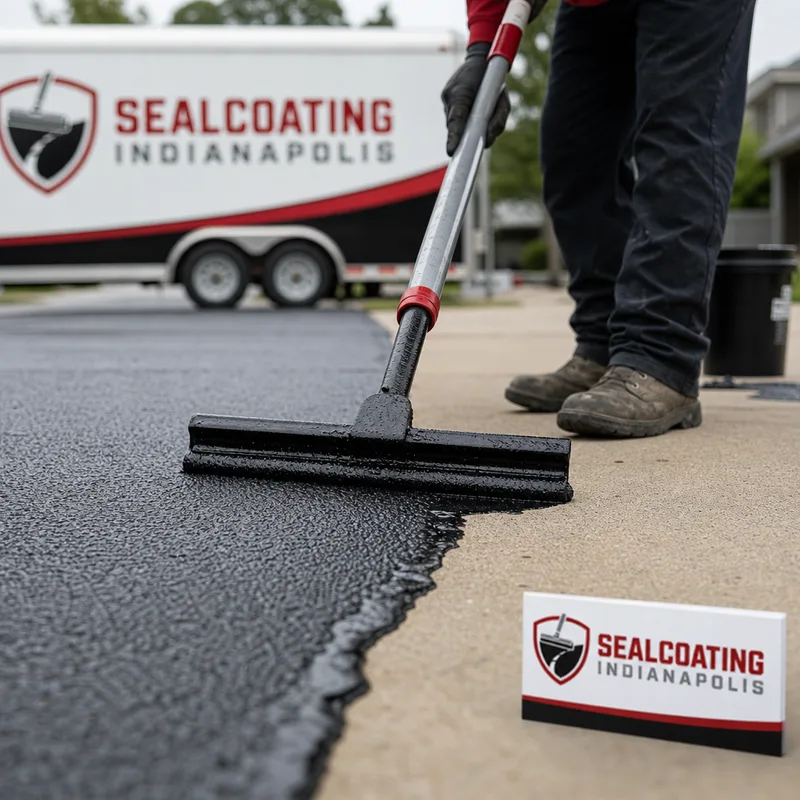
The transition from asphalt to the concrete garage apron is the edge people see every day. It gets cut in by hand and the concrete is protected before the spray work starts.
A second coat is worth paying for on porous or previously unsealed asphalt and is often unnecessary on a drive sealed two years ago. We say which applies before the quote, not after.
Circular and side-load drives have a parking pattern to work around. We agree the sequence and the reopening order so you are not blocked in while the surface cures.
Work starts with a walk of the full surface. On a wide drive that means looking at the center, where traffic concentrates, and the outer thirds, which often oxidize faster because nothing drives on them.
Cleaning takes longer on a larger area and it is not a step to compress. Loose material, dirt tracked from landscaping, and any oil staining near the garage have to come off before sealer goes down, because sealer bonds to asphalt and not to what is sitting on it.
Application follows the plan set at the walk-through: cut-ins first along concrete and borders, then the body of the drive in a sequence that keeps every seam wet. The finish is checked across the full width before we leave.
Finally, we apply the sealer in a controlled pattern for even coverage, paying close attention to turning areas near the garage and the street where tires pivot and scrub. Before we leave, we confirm the plan for keeping cars off the driveway until the surface has set.
If you are looking for a driveway sealing company Indianapolis residents can rely on, this is the difference: the surface is cleaned, edges are handled neatly, and the cure plan is clear.
The same five steps run on every drive we seal in Carmel. On a wide surface each one simply takes longer, which is accounted for in the scope rather than absorbed on the day.
We walk the surface, measure it, and note cracking, oxidation, low spots and any areas where sealing is not the right answer yet.
Concrete aprons, sidewalks, curbs and landscape edges are masked or protected before any material is staged.
Blowing, sweeping and spot treatment of oil staining, carried across the entire mat rather than the traffic lanes alone.
Edges by hand first, then the body of the drive in a planned sequence that keeps lap seams from showing.
We give you a realistic dry window for the weather that day and the order to bring vehicles back onto the surface.
Sealing an average single-car or two-car residential driveway typically runs about $250 to $700, and larger driveways and circular drives often land around $700 to $1,400+. Carmel surfaces sit toward the upper half of those bands more often than not, because the drives here are simply bigger. What moves a quote within its band: total square footage, how much cleaning the surface needs, any crack filling or spot patching, access around the property, and whether oil staining near the garage calls for separate treatment. We measure on site and confirm the number before any work is booked.
Your final price depends on square footage, how much cleaning is required, crack filling or spot patching needs, access, and whether there are oil spots that need special treatment. The exact cost is confirmed after a quick on-site look at your driveway and its condition.
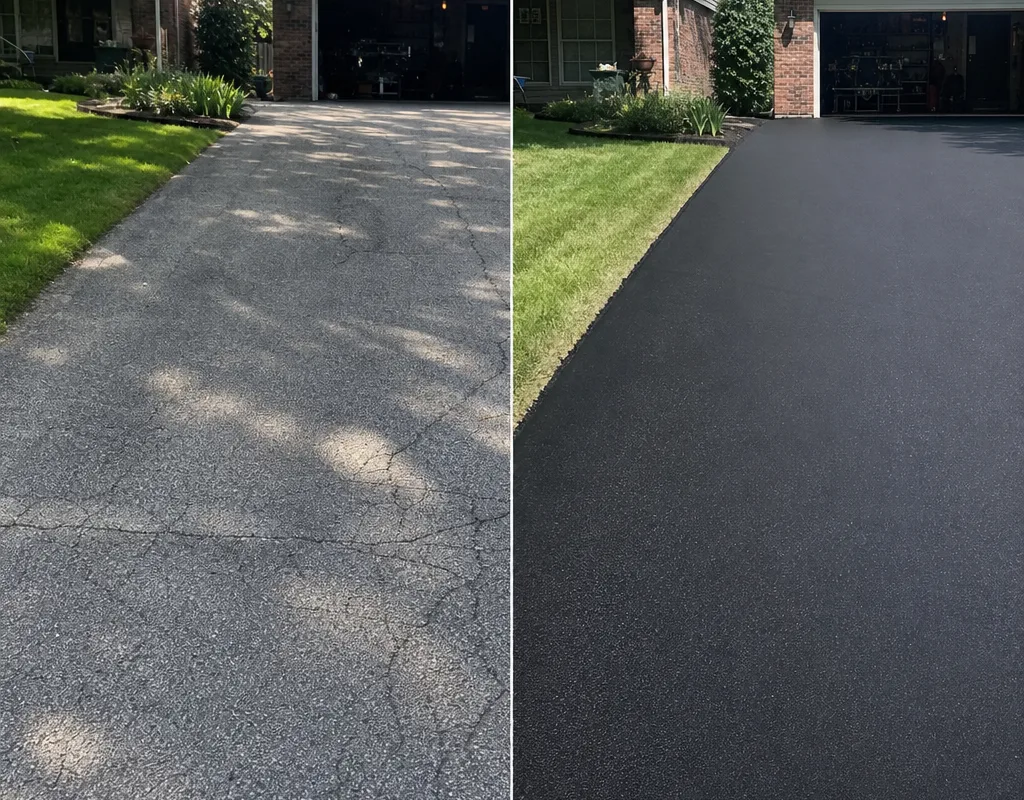
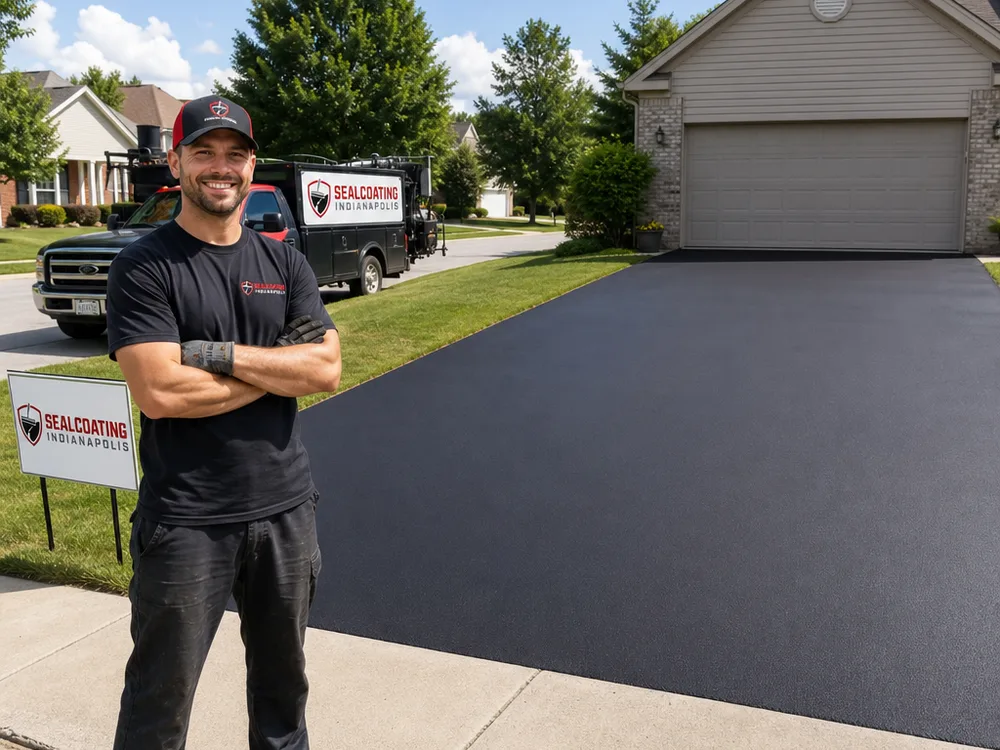
A few images from driveway work of the kind described above, showing the edges and finish rather than a staged shot.
The questions below come up most often on wider residential drives, where the cost of getting application wrong is spread across a lot more surface.
We will walk the surface, measure it, and give you a written scope that says what the pavement needs and what it does not.
Request a quote
Send a few details and we will confirm a time to come look, usually within one business day.