
Cracks worth filling
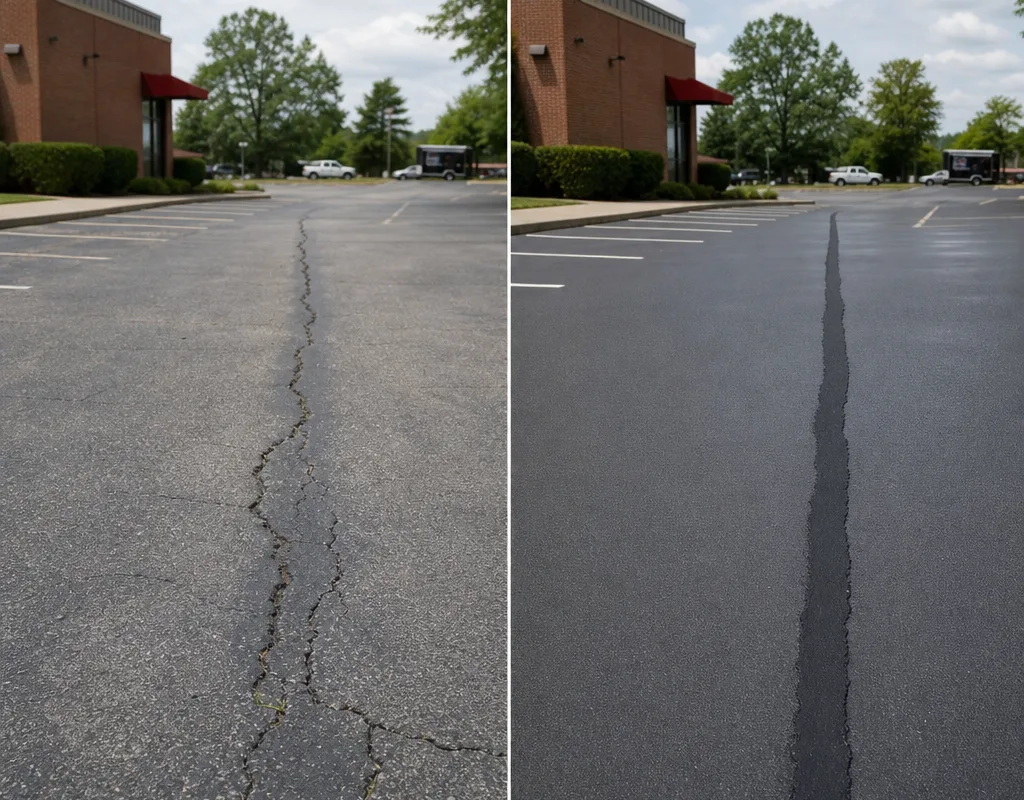
A clean single crack wider than roughly a quarter inch takes sealant well and stops water reaching the base. These are the ones where filling genuinely buys years.
Serving Indianapolis, Indiana & surrounding areas
Mon–Fri 8am–6pm · Sat 9am–2pm
Older asphalt asks a different question than new asphalt. Not when to seal it, but what has to be repaired first, and whether sealing is honestly worth doing at all.
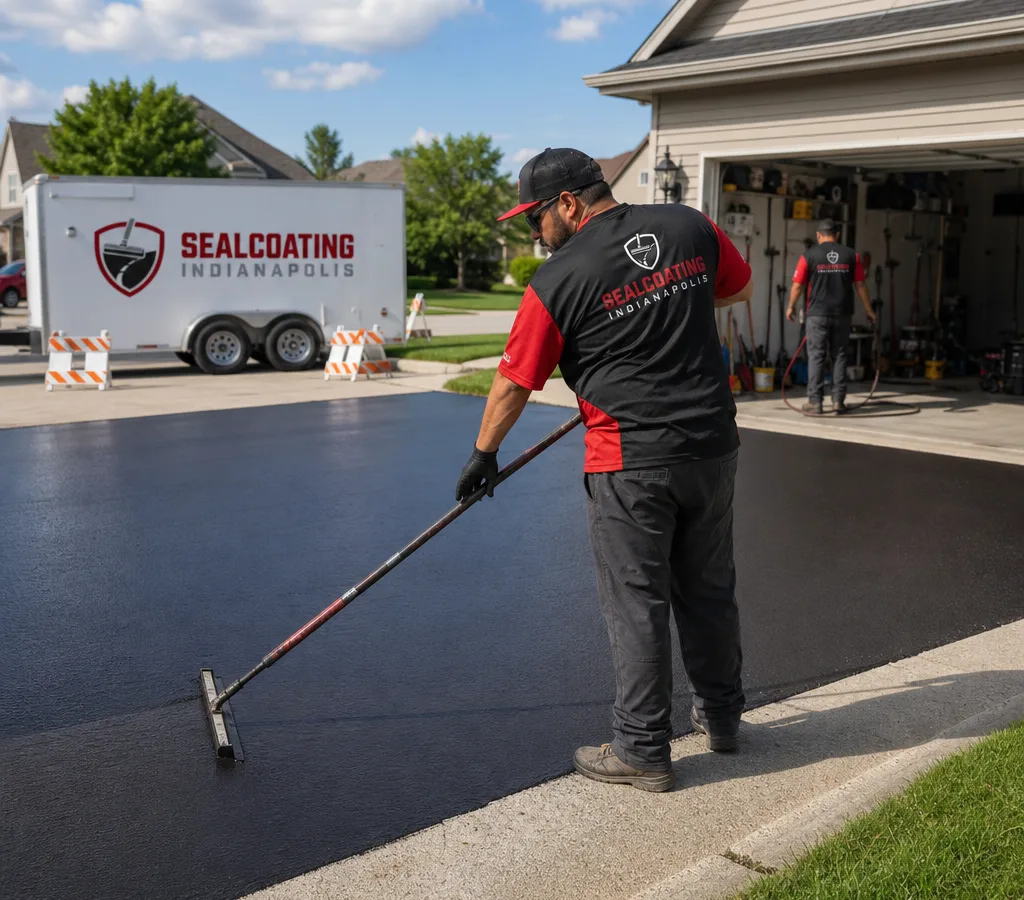
Pavement around the older parts of Noblesville has usually been patched at least once, and frequently carries cracking that has been there long enough to branch. Sealer poured over that does nothing structural: the cracks telegraph through within a season and the surface looks worse than before it was coated.
The sequence that works is to sort each defect into one of three piles first. Some cracks get filled, some areas get cut out and patched, and some pavement is far enough gone that money spent sealing it would be wasted.
If you are comparing contractors, focus on the prep and the cure plan. The best blacktop sealing in Indianapolis is rarely about who can spread material fastest; it is about who cleans thoroughly, treats oil spots correctly, keeps sealer off concrete and brick, and tells you when you can safely drive on it again.
For an overview of our broader work, including other asphalt protection options, you can start with asphalt sealing in Indianapolis.
Every older driveway we look at in Noblesville gets the same triage, and the result decides whether sealing is the next step or the wrong one.
Book Your Free InspectionA clean single crack wider than roughly a quarter inch takes sealant well and stops water reaching the base. These are the ones where filling genuinely buys years.
Interconnected cracking in a patch pattern means the base below has already failed. Filling it accomplishes nothing; the section has to be cut out and replaced.
Very fine surface cracking does not take sealant, and forcing material into it leaves visible lines for no gain. Sealcoating covers these adequately on its own.
Previous repairs are usually a different age and texture than the pavement around them. We check whether their seams have opened, since that is where water gets in next.
Where failure runs across most of the surface, we say so and price the alternative rather than selling a coat that hides it for one summer.
The assessment is slower on older pavement, because the surface has a history and it is worth reading. Patches, previous crack work, settlement and drainage all tell you what the driveway has been dealing with.
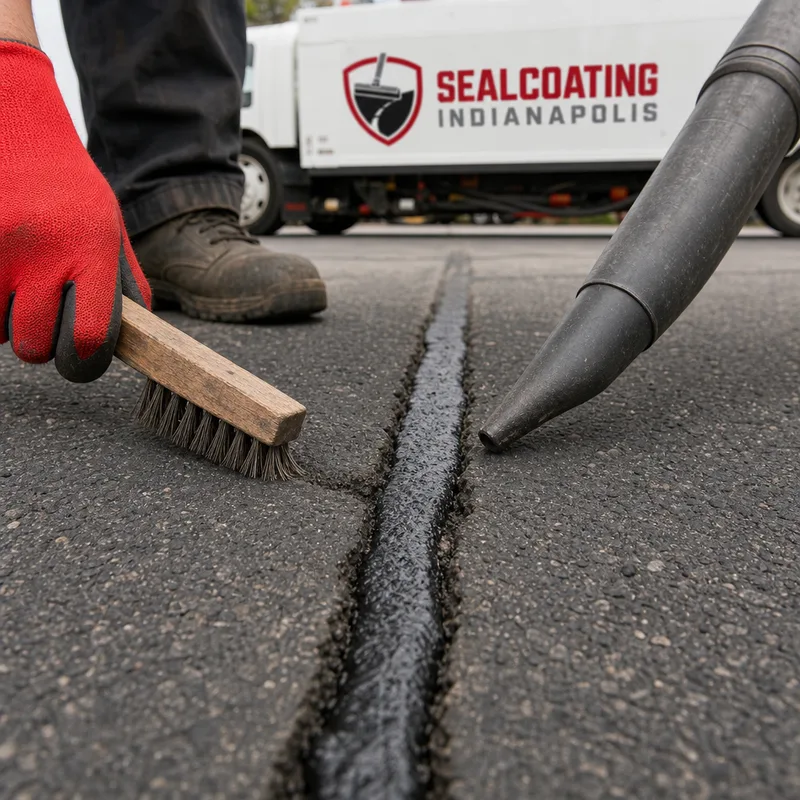
Crack work comes first and is quoted on measured footage, not estimated by eye. Each crack is cleaned out before sealant goes in, since material pressed over dirt bonds to the dirt and lifts out within months.
Patching, where it is needed, has to set before any coating goes over it. That occasionally means two visits, which we will tell you at the walk-through rather than discovering on the day.
Finally, we apply the sealer in a controlled pattern for even coverage, paying close attention to turning areas near the garage and the street where tires pivot and scrub. Before we leave, we confirm the plan for keeping cars off the driveway until the surface has set.
If you are looking for a driveway sealing company Indianapolis residents can rely on, this is the difference: the surface is cleaned, edges are handled neatly, and the cure plan is clear.
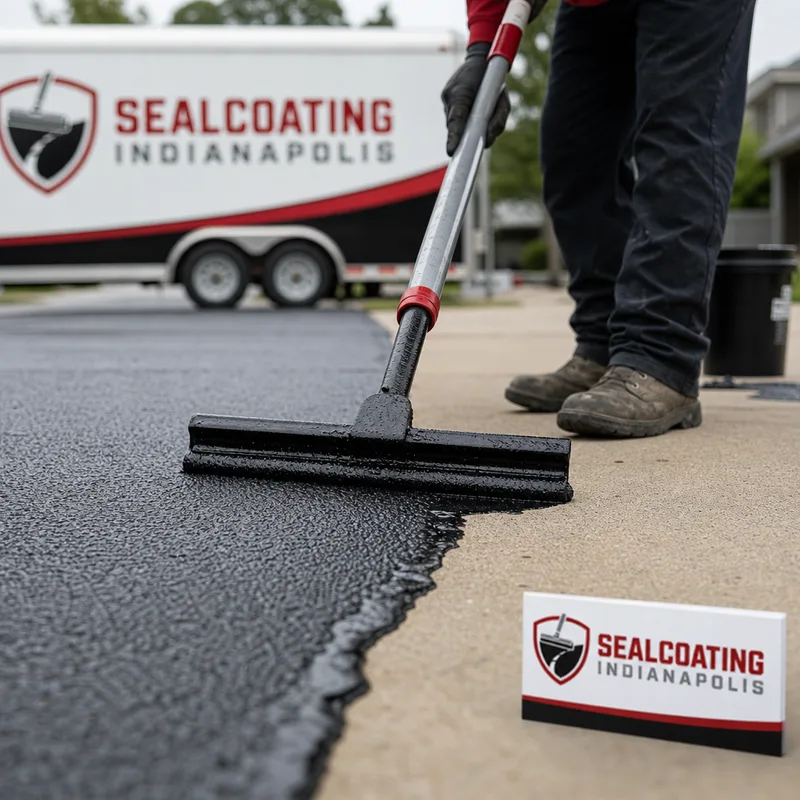
The order matters more here than anywhere else we work, because each step assumes the one before it was actually done.
We walk the pavement and sort what we find into filling, patching, or leave-alone, and tell you if sealing is not worth it.
Cracks worth filling are measured so the quote reflects real footage rather than a guess.
Each crack is cleaned to its edges before hot rubberized sealant goes in, which is what makes the repair last.
Failed sections are cut out, replaced and compacted, then given time before anything is applied over them.
The surface is cleaned, cut in, coated, and you get a realistic reopening window.
Crack sealing typically runs about $0.75 to $2.50 per linear foot for straightforward driveway and parking lot cracks, with small minimums often putting many residential jobs around $250 to $900. Patching commonly falls in the $250 to $1,500 range for small to mid-size work. Sealcoating itself is priced separately, usually $250 to $700 for an average residential driveway. Final pricing depends on crack width and depth, how much cleaning and preparation is required, whether routing is needed, and whether patching is required before sealing. The exact cost is confirmed after an on-site evaluation and measured scope.
Your final price depends on square footage, how much cleaning is required, crack filling or spot patching needs, access, and whether there are oil spots that need special treatment. The exact cost is confirmed after a quick on-site look at your driveway and its condition.
Images showing crack preparation and repair work of the kind described above, before and after sealant was applied.
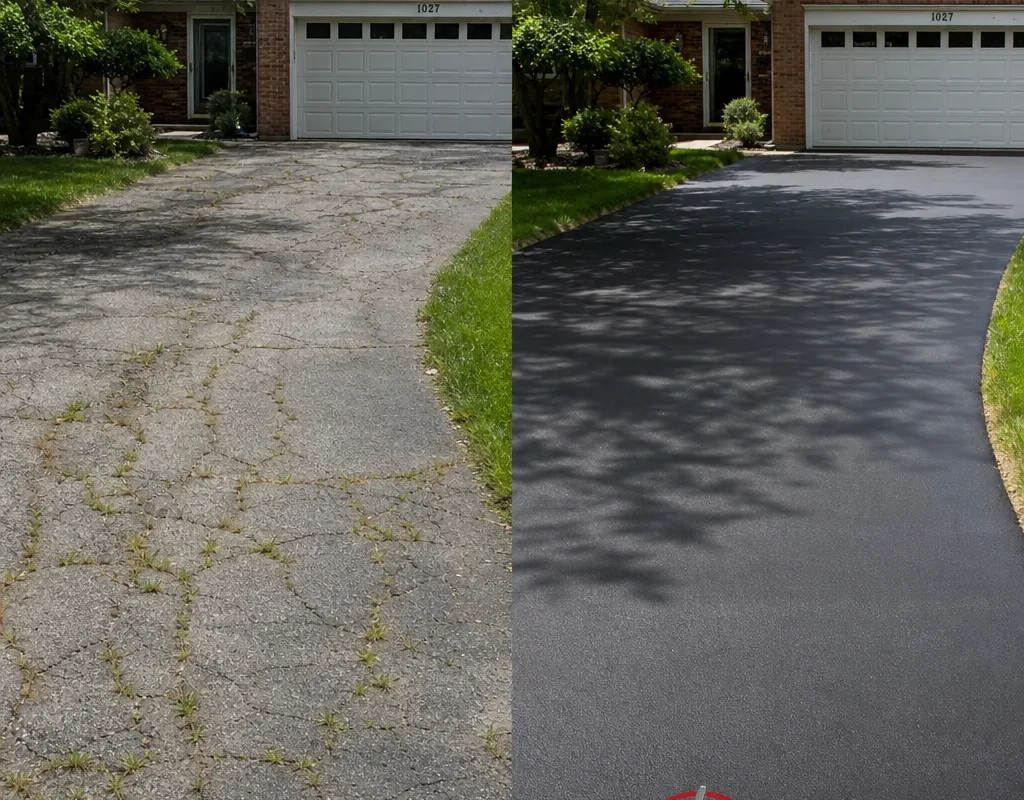
These come up wherever pavement is old enough to have been fixed before, which covers most of the driveways we are called to here.
We will read the surface, measure the crack work, and give you a written scope that separates repair from sealing.
Request a quote
Send a few details and we will confirm a time to come look, usually within one business day.