
The condition of the unconfined edge
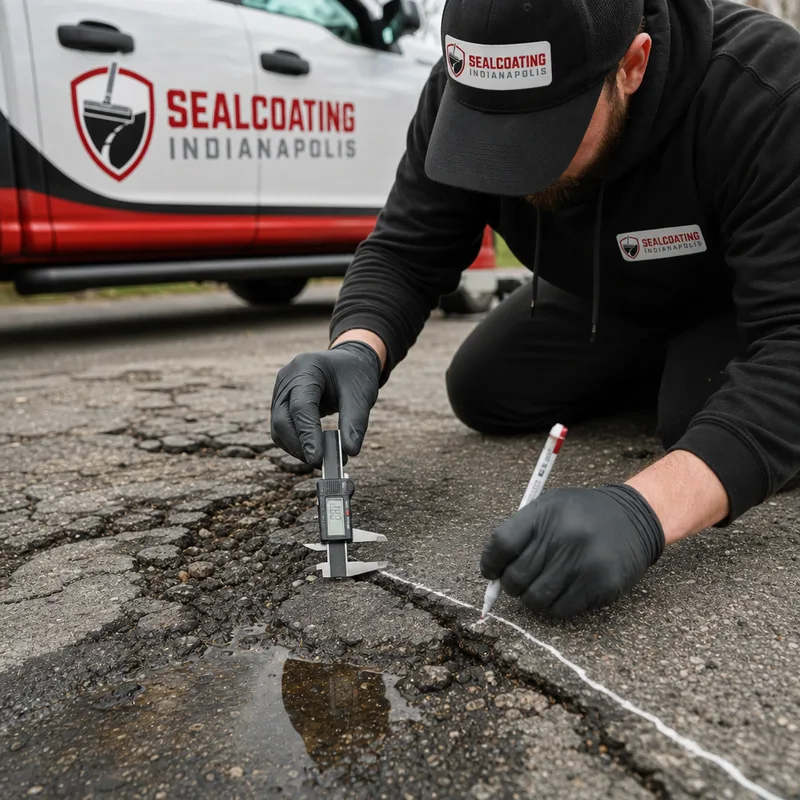
Where asphalt meets turf with no curb, we check for undercutting, crumbling and the hairline cracking that runs parallel to the border a few inches in.
Serving Indianapolis, Indiana & surrounding areas
Mon–Fri 8am–6pm · Sat 9am–2pm
A lot of pavement in Fishers is young enough to still be in good shape and old enough to be losing its edges. Where asphalt meets lawn with no curb holding it, that boundary is where failure starts.
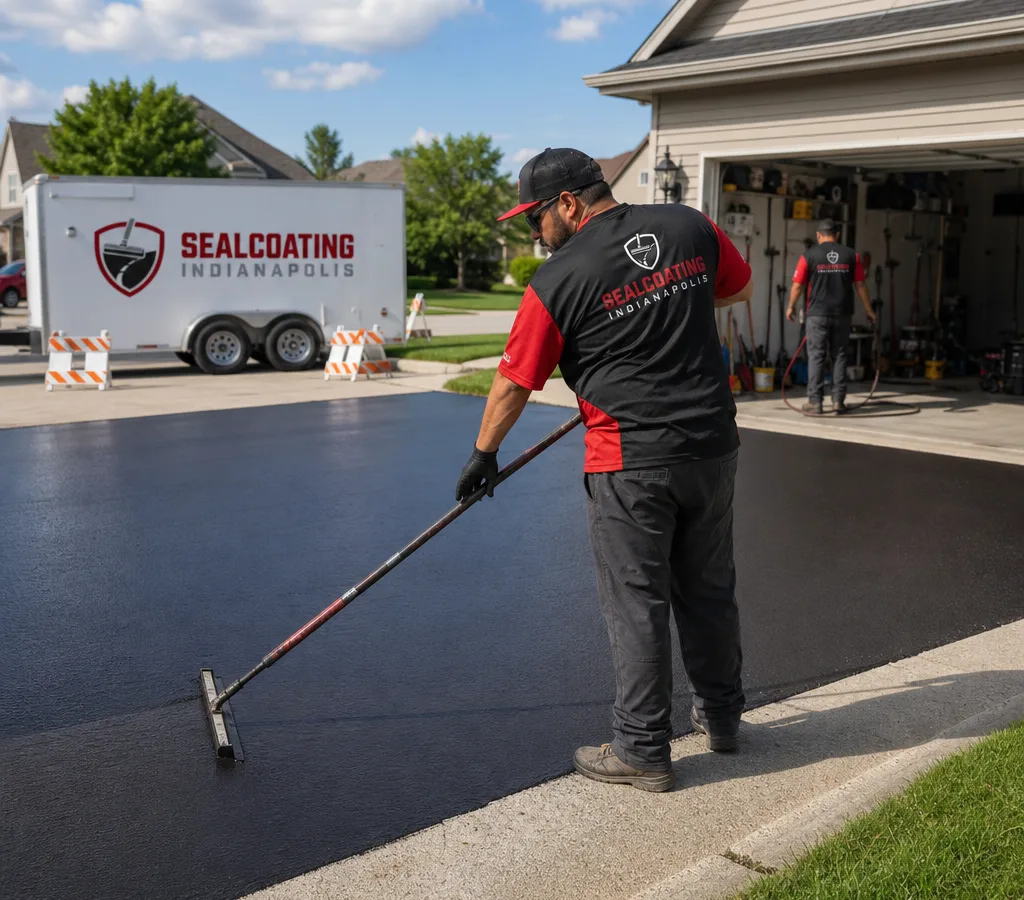
Driveways in newer Fishers subdivisions frequently run straight into grass with nothing confining the asphalt at the sides. Without a curb or a concrete border, the edge carries no lateral support and begins to crumble under the weight of a tire that strays onto it.
Sealer applied over an already-failing edge locks in the shape of the damage. The useful order is to look at what the border is doing, deal with it, and seal a surface that still has its full width.
If you are comparing contractors, focus on the prep and the cure plan. The best blacktop sealing in Indianapolis is rarely about who can spread material fastest; it is about who cleans thoroughly, treats oil spots correctly, keeps sealer off concrete and brick, and tells you when you can safely drive on it again.
For an overview of our broader work, including other asphalt protection options, you can start with asphalt sealing in Indianapolis.
Younger pavement rarely needs much in the middle. Nearly everything worth catching on these surfaces sits at the perimeter or underneath.
Book Your Free InspectionWhere asphalt meets turf with no curb, we check for undercutting, crumbling and the hairline cracking that runs parallel to the border a few inches in.
Water that sheets off the side and soaks the shoulder softens the base the edge depends on. We note where it runs and whether the grade is sending it somewhere useful.
The two ends of a driveway are where the base was disturbed most during construction, so those are the first places a dip or a low spot shows up.
Pavement in its first year is often still curing and does not need sealer yet. Telling you to wait costs us the job and saves you a coat that does nothing.
A broken border can be cut back and patched so the drive regains a straight, supported edge. Sealing over the damage simply makes it permanent.
The walk-through starts at the perimeter rather than the center. We follow both sides from the street to the garage, looking for the places where the asphalt has started to break away or where the soil beside it sits lower than the pavement.
Where the shoulder has eroded, the fix is often simple and worth doing first: build the grade back up so the edge is supported, or cut out and patch the section that has already gone. Neither takes long, and both change how the next few years go.
Only then does the surface get cleaned and sealed. Cut-ins along a soft or open edge need a steadier hand than a curbed one, because there is nothing to work the squeegee against.
Finally, we apply the sealer in a controlled pattern for even coverage, paying close attention to turning areas near the garage and the street where tires pivot and scrub. Before we leave, we confirm the plan for keeping cars off the driveway until the surface has set.
If you are looking for a driveway sealing company Indianapolis residents can rely on, this is the difference: the surface is cleaned, edges are handled neatly, and the cure plan is clear.
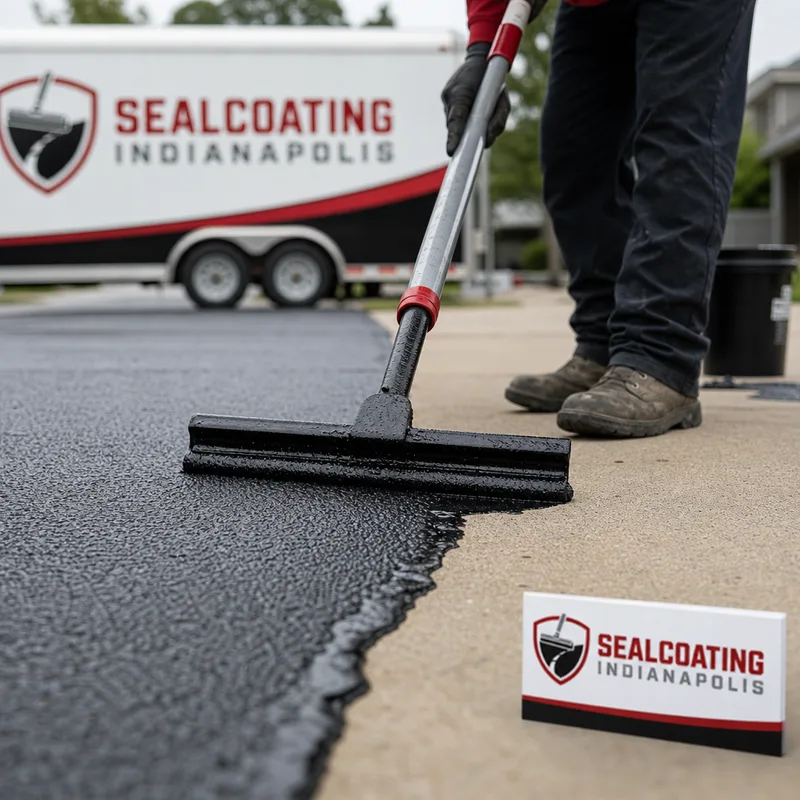
These five steps are the same everywhere we work, but on an unconfined driveway the first and second carry most of the value.
Both edges from street to garage, noting crumbling, undercutting and any place the shoulder has dropped away from the asphalt.
We look at the grade and at the evidence on the surface, since standing water and a softened base both leave marks.
Broken edges are cut back and patched, and eroded shoulders are built back up so the pavement is supported along its full length.
The surface is cleared, then edges are cut in by hand, which takes more care where there is no curb to work against.
The body of the drive is coated and you get a realistic reopening window for that day's weather.
Sealing work on a standard residential driveway typically runs about $250 to $700, with larger and circular drives often landing around $700 to $1,400+. Edge repair and patching are quoted as their own line, commonly $250 to $1,500 for small to mid-size work, so you can see what is maintenance and what is repair. Square footage, cleaning requirements, the amount of crack or edge work involved, access, and any oil staining all move the figure within those bands. Nothing is committed until we have walked the surface and measured it.
Your final price depends on square footage, how much cleaning is required, crack filling or spot patching needs, access, and whether there are oil spots that need special treatment. The exact cost is confirmed after a quick on-site look at your driveway and its condition.
Images from residential work of this kind, including repair carried out before any sealer was applied.
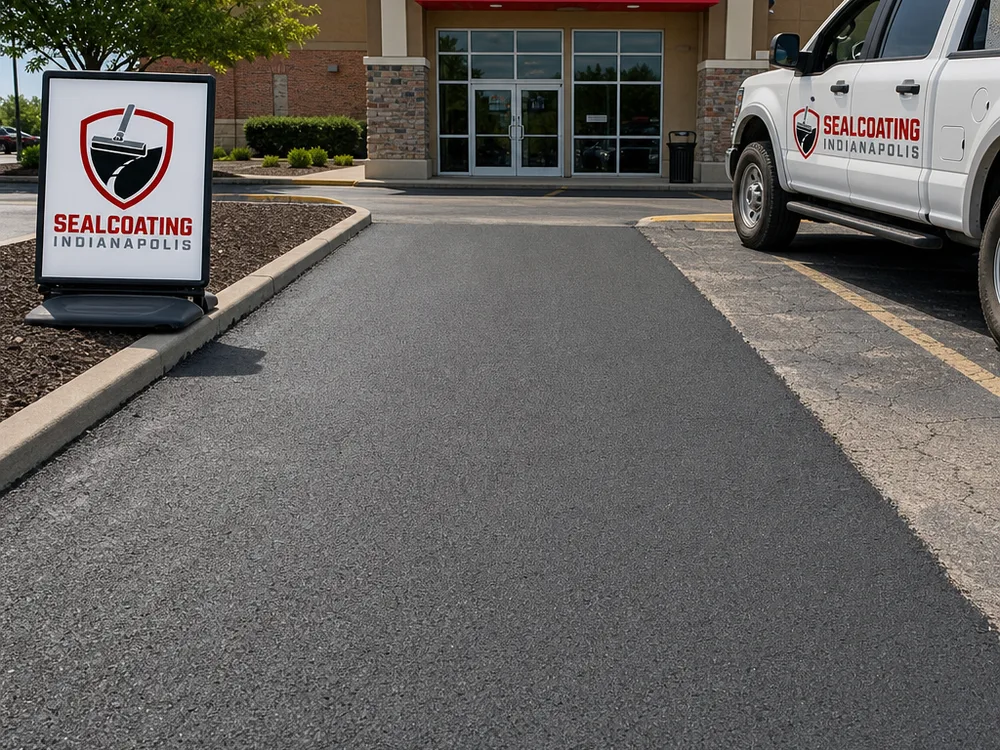
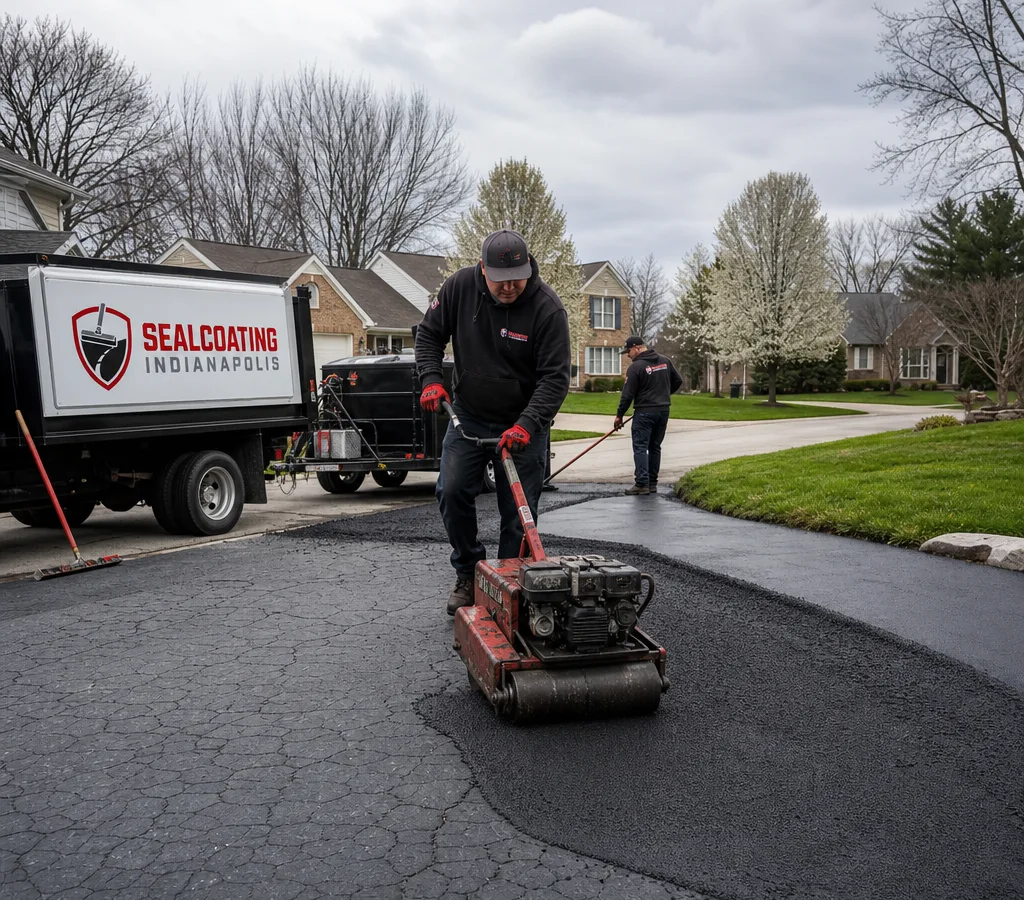
Most of these come from owners of newer homes, where the driveway looks fine from the house and is quietly losing its edges.
We will walk both sides, tell you what the borders are doing, and give you a written scope covering repair and sealing separately.
Request a quote
Send a few details and we will confirm a time to come look, usually within one business day.